HPMC for Tile Adhesive: The Essential Performance Enhancer in Modern Construction
Understanding the Critical Role of HPMC in Tile Adhesive Formulations
In the evolving landscape of modern construction materials, hydroxypropyl methylcellulose (HPMC) has emerged as an indispensable component in high-performance tile adhesives. This specialized cellulose ether derivative fundamentally transforms ordinary cement mixtures into professional-grade adhesive systems that meet the demanding requirements of today’s construction projects.
SHANDONG LANDU, a leading manufacturer in the chemical materials industry, has positioned itself at the forefront of HPMC production, delivering premium-quality products that enhance tile adhesive performance across diverse applications.
The Science Behind HPMC's Effectiveness in Tile Adhesives
HPMC functions as a multifunctional additive in tile adhesive formulations, addressing several critical performance parameters simultaneously.
The molecular structure of HPMC, featuring both hydrophilic and hydrophobic segments, enables it to interact effectively with cement particles and water molecules in the adhesive mixture.
Superior Water Retention Properties
Perhaps the most valuable contribution of HPMC to tile adhesive performance is its exceptional water retention capability.
When incorporated into adhesive formulations at concentrations typically ranging from 0.3% to 1.0%, HPMC creates a protective colloidal network that significantly reduces water evaporation rates. This mechanism extends the open time of the adhesive—the critical window during which tiles can be successfully positioned and adjusted.
Enhanced Adhesion Strength and Bond Durability
HPMC significantly improves the bonding interface between tiles and substrates. The polymer’s ability to modify the rheological properties of the adhesive results in better wetting of both the tile backing and the substrate surface. This enhanced contact area translates directly into superior bond strength and long-term durability. Independent testing by construction materials laboratories has demonstrated that HPMC-modified tile adhesives can achieve tensile adhesion strength values exceeding 1.0 N/mm², substantially surpassing the minimum requirements established by international standards such as EN 12004.
SHANDONG LANDU: Setting the Standard for HPMC Quality
As a specialized manufacturer with extensive experience in cellulose ether production, SHANDONG LANDU has developed a comprehensive range of HPMC products specifically engineered for construction applications.
The company’s dedication to research and development has resulted in HPMC formulations that deliver consistent performance across varying environmental conditions and application methods.
SHANDONG LANDU employs state-of-the-art production technology to ensure precise control over critical HPMC parameters, including:
Molecular weight distribution
Degree of substitution
Particle size consistency
Viscosity profiles
Dissolution characteristics
Our manufacturing precision translates directly into predictable performance in tile adhesive applications, allowing formulators to develop products with consistent working properties and reliable end-use performance.
Specialized HPMC Grades for Tile Adhesive Applications
Recognizing the diverse requirements of different tile adhesive systems, SHANDONG LANDU offers multiple specialized HPMC grades:
K100HT
A modified grade offering exceptional water retention properties, ideal for applications in hot or dry environments
K40
Engineered for balanced performance across varying conditions, providing excellent workability and adhesion
K200
An unmodified high-viscosity grade for formulators seeking maximum flexibility in their adhesive systems
Each product undergoes rigorous quality control testing to ensure compliance with international standards and consistent batch-to-batch performance—a critical consideration for adhesive manufacturers seeking reliable raw materials.
Technical Specifications That Define Quality HPMC for Tile Adhesives
When evaluating HPMC for tile adhesive applications, several key technical parameters must be considered:
Parameter
Specification
Impact on Tile Adhesive Performance
Viscosity (2% solution)
70,000-80,000 mPa·s
Determines water retention capability and sag resistance
Moisture Content
≤5%
Affects the stability and shelf life of dry-mix formulations
pH Value
6-8
Ensures compatibility with cement chemistry
Particle Size
>98.5% through 100 mesh
Influences the dissolution rate and mixing efficiency
Methoxyl Content
19-24%
Affects water solubility and thermal gelation properties
Hydroxypropyl Content
7-12%
Influences surface activity and compatibility with other additives
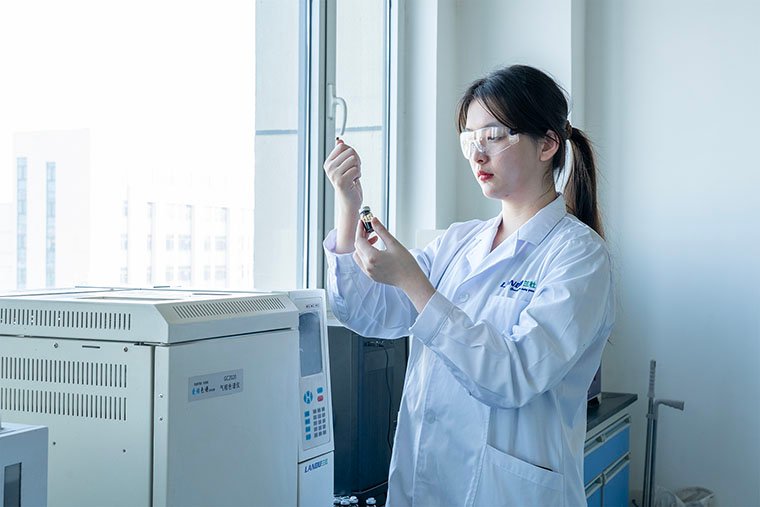
SHANDONG LANDU’s quality control laboratory employs advanced analytical techniques to verify these critical parameters for every production batch, ensuring consistent performance in customer applications.
Practical Benefits of HPMC in Tile Adhesive Applications
Extended Open Time for Precise Tile Placement
The enhanced water retention provided by HPMC significantly extends the working time available for tile installation. This practical benefit is particularly valuable in large-scale commercial projects where installers must cover substantial areas while maintaining precise alignment and leveling.
SHANDONG LANDU’s K40HT grade is specifically formulated to provide maximum open time extension, even under challenging environmental conditions.
Improved Sag Resistance for Vertical Applications
The rheological modification properties of HPMC transform ordinary cement mixtures into thixotropic adhesive systems that resist sagging on vertical surfaces. This enables secure installation of heavy tiles on walls without slippage during the critical setting period.
Independent testing has demonstrated that adhesives containing SHANDONG LANDU’s HPMC can support tiles weighing up to 40 kg/m² on vertical surfaces without measurable slippage.
Enhanced Water Resistance and Durability
HPMC contributes to the development of a more cohesive microstructure within the cured adhesive layer, reducing porosity and enhancing resistance to water penetration. This improved microstructure translates into superior long-term durability, particularly in wet areas such as bathrooms and kitchens.
The hydrophobic-hydrophilic balance in LANDU’s HPMC products is carefully optimized to deliver this critical performance benefit.
Formulation Guidelines for Optimizing HPMC Performance in Tile Adhesives
While HPMC delivers significant benefits in tile adhesive formulations, achieving optimal performance requires careful consideration of several factors:
Recommended Dosage Levels
For standard tile adhesive applications, SHANDONG LANDU recommends HPMC incorporation at 0.3-0.5% of the total dry formulation weight. For premium-grade adhesives or applications requiring extended open time, dosages may be increased to 0.5-0.8%. The company’s technical support team provides customized recommendations based on specific formulation requirements and performance targets.
Compatibility with Other Additives
HPMC interacts synergistically with several common tile adhesive additives, including:
Superplasticizers: When properly balanced, these can complement HPMC’s rheological effects
Retarding agents: These can extend the setting time to complement HPMC’s open time extension
SHANDONG LANDU’s research laboratory has conducted extensive compatibility studies to identify optimal additive combinations for various performance requirements.
To maximize HPMC performance in tile adhesive formulations, several processing factors should be considered:
Mixing sequence: HPMC should typically be pre-blended with other dry ingredients before water addition
Mixing intensity: Sufficient shear is required to ensure complete HPMC hydration and performance development
Temperature control: Mixing water temperature affects HPMC dissolution kinetics and initial adhesive properties
SHANDONG LANDU provides detailed technical guidance on these processing considerations to ensure optimal performance in customer applications.
Quality Assurance and International Standards Compliance
As a responsible manufacturer committed to product excellence, SHANDONG LANDU maintains comprehensive quality management systems that ensure consistent HPMC performance in tile adhesive applications. The company’s products comply with relevant international standards, including:
ISO 9001:2015 quality management system certification
Compliance with European REACH regulations
Adherence to FDA requirements for cellulose derivatives
Conformance with ASTM C1346 specifications for HPMC in construction applications
Our commitment to quality and regulatory compliance provides customers with confidence that SHANDONG LANDU’s HPMC products will deliver consistent performance in their tile adhesive formulations.
Sustainable Aspects of HPMC in Modern Construction
Beyond its technical benefits, HPMC contributes to sustainability objectives in construction applications. As a cellulose-derived product, HPMC is manufactured from renewable resources, offering a more environmentally responsible alternative to many petroleum-based construction chemicals. Additionally, the improved durability and reduced failure rates achieved with HPMC-modified adhesives contribute to extended building lifecycles and reduced material waste.
SHANDONG LANDU maintains a strong commitment to environmental responsibility throughout its manufacturing processes, implementing energy-efficient production technologies and waste minimization practices that align with global sustainability objectives.
HPMC as a Value-Adding Component in Modern Tile Adhesives
In the competitive landscape of construction materials, HPMC stands as a critical performance-enhancing component that transforms ordinary cement mixtures into professional-grade tile adhesive systems.
Through its multifunctional benefits—including superior water retention, enhanced adhesion strength, improved sag resistance, and extended workability—HPMC delivers tangible value to adhesive manufacturers, professional installers, and end-users alike.
SHANDONG LANDU, with its specialized focus on high-quality cellulose derivatives, continues to lead the industry in developing innovative HPMC products that meet the evolving needs of the construction sector.
By combining advanced manufacturing technology with comprehensive technical support, the company provides not just a chemical ingredient, but a complete performance solution for tile adhesive applications.
For formulators seeking to develop superior tile adhesive products, SHANDONG LANDU offers both the high-quality HPMC products and the technical expertise needed to achieve optimal results.
Contact their technical team today to discuss how their specialized HPMC grades can enhance your specific tile adhesive formulations.