Construction and Building Solutions
Cellulose Ethers Uses in Modern Construction.
LANDERCOLL Cellulose Ethers Applicaitons
Adesivo per piastrelle
Stucco per pareti
Tile grout
EIFS/ ETICS
Masonry Mortar
Gypsum based moratr
Malta impermeabile
Malta di riparazione
Self-leveling Compounds
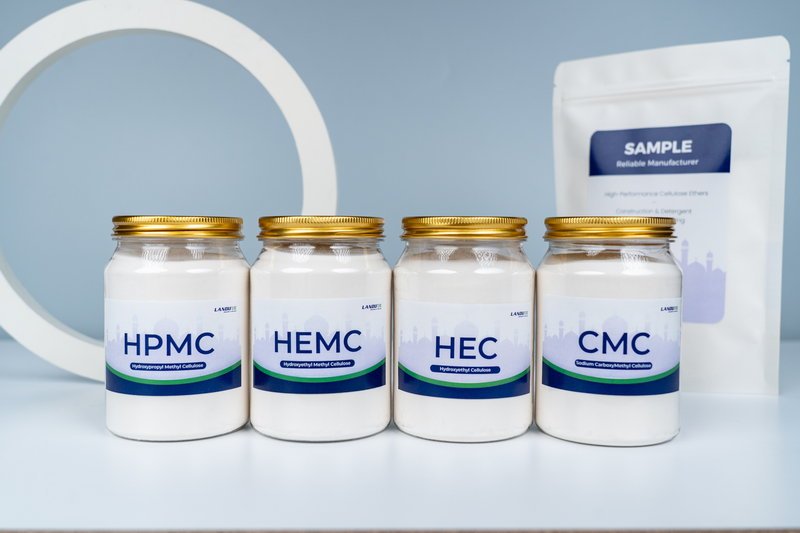
Our Products
Our products are well received all over the world. We insist on creating value for customers and grow together with customers.
Domande frequenti
The ideal cellulose ether for tile adhesive depends on the required water retention, open time, and workability. HPMC and HEMC are commonly used in tile adhesive formulations because they help improve application performance, reduce water loss, and support consistent mortar behavior. Selecting the appropriate viscosity grade should be based on formulation requirements and performance targets.
Wall putty formulations typically require cellulose ethers that provide good water retention, smooth application, and sufficient sag resistance. Medium- to high-viscosity HPMC grades are commonly used, although the optimal grade depends on raw materials, application conditions, and desired finish quality.
Both HPMC (Hydroxypropyl Methyl Cellulose) and HEMC (Hydroxyethyl Methyl Cellulose) are cellulose ethers used in construction materials. They offer similar functions, including water retention and thickening. The choice between HPMC and HEMC often depends on formulation requirements, climatic conditions, and specific performance preferences in the final application.
The dosage of cellulose ether varies depending on the application type, formulation design, and target performance. In most dry-mix mortar systems, cellulose ether is added in small amounts to improve water retention, workability, and consistency. Laboratory testing is recommended to determine the appropriate dosage for each formulation.
Water retention helps ensure proper cement hydration and improves the workability of construction materials. Adequate water retention can contribute to easier application, extended open time, and more consistent performance in products such as tile adhesives, wall putties, gypsum plasters, and cement-based mortars.
Yes. HEC (Hydroxyethyl Cellulose) is widely used in water-based paints and coatings as a rheology modifier and thickener. It helps improve viscosity control, pigment suspension, storage stability, and application properties in many coating formulations.
Selecting the appropriate cellulose ether grade depends on several factors, including application type, viscosity requirements, water retention targets, workability expectations, and formulation composition. Technical evaluation and application testing are recommended to identify the most suitable grade for specific production needs.
When evaluating a cellulose ether supplier, important factors include product consistency, quality control systems, technical support capability, supply reliability, documentation availability, and application expertise. A supplier that can provide stable quality and formulation support can help improve long-term production efficiency and product performance.